How to stay focused while studying in a shared room can be challenging when you have to deal with noise, limited space and different daily routines. Whether you live in a college hostel, PG accommodation or share a bedroom with someone, creating a comfortable study environment requires proper planning.
A well-organized study space, a consistent routine and a few practical changes can make it easier to concentrate and complete your academic tasks. In this guide, we explore simple ways to stay focused while studying in a shared room without disturbing others or requiring a separate study room.
Understanding how to stay focused while studying in a shared room starts with building a dedicated study area, managing distractions and following a consistent daily routine.
How to Stay Focused While Studying in a Shared Room: 7 Practical Strategies
1. Create a Dedicated Study Zone
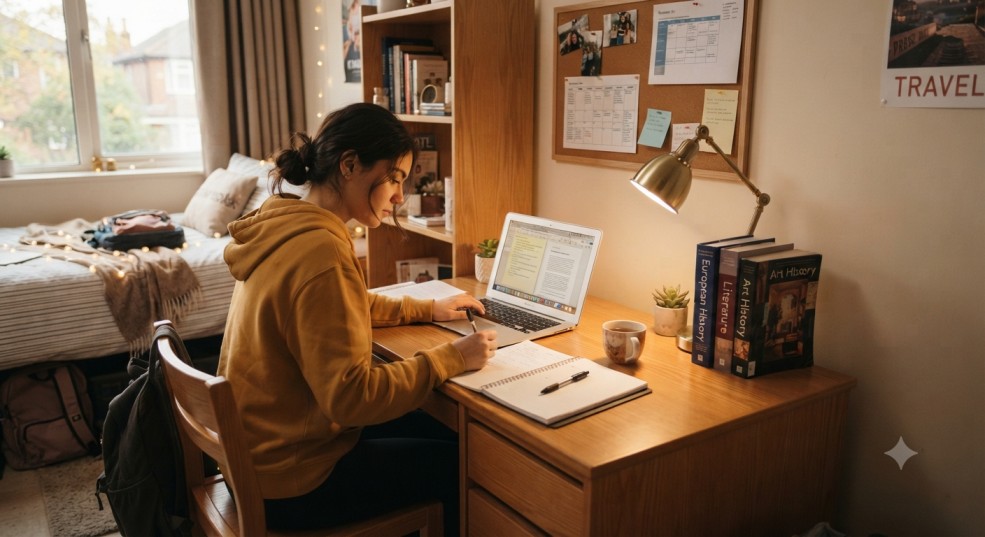
One of the best ways to stay focused while studying in a shared room is to create a dedicated study area. Even if you cannot have a separate room, keeping one corner or desk reserved for academic work can help you build a consistent study routine.
Choose a location where you can comfortably use your laptop, books and stationery without interfering with your roommate’s space. Try to keep your study materials organized so that you do not waste time searching for things whenever you sit down to study.
Keep Your Study Essentials Within Reach
Keep frequently used items such as notebooks, pens, chargers and textbooks close to your desk. Use small organizers, storage boxes or desk shelves to avoid clutter. A clean workspace makes it easier to concentrate and helps you maintain a productive study environment.
If your room has limited space, explore our guide on Study Desk Organization to make better use of your available desk area.
2. Manage Noise and Distractions
Noise is one of the biggest challenges when studying in a shared room. Different schedules, phone conversations, music and everyday activities can interrupt your concentration. While you may not be able to control everything happening around you, a few simple arrangements can make studying easier.
Use Headphones or Earplugs
Noise-cancelling headphones or comfortable earplugs can help reduce background distractions. If you prefer listening to something while studying, try instrumental music or soft background sounds at a comfortable volume. Avoid switching between songs or playlists frequently, as this can interrupt your study session.
Coordinate Quiet Hours with Your Roommate
Discuss your study schedules with your roommate and agree on specific quiet hours whenever possible. You do not need to follow exactly the same routine, but respecting each other’s important study periods can prevent unnecessary interruptions.
Keep Your Phone Away
Social media notifications and frequent messages can distract you even when the room is quiet. Keep your phone on silent or enable Do Not Disturb mode during study sessions. Check messages during planned breaks instead of interrupting your concentration repeatedly.
3. Create a Consistent Study Routine
When you share a room with someone else, having a consistent study routine can make it easier to stay focused. Instead of waiting for the perfect environment, plan your study sessions around your daily schedule and choose times when the room is relatively quiet. A predictable routine also helps you develop better study habits over time.
Learning how to stay focused while studying in a shared room becomes easier when you follow a realistic schedule and create habits that reduce everyday distractions.
Set Clear Study Hours
Decide when you are most comfortable studying and reserve those hours for important academic tasks. If your roommate follows a different schedule, communicate your preferred study hours in advance. Try to maintain a routine that is realistic and flexible enough to accommodate classes, meals and other responsibilities.
Break Study Sessions into Smaller Tasks
Studying continuously for several hours can make it difficult to maintain concentration. Divide larger assignments into smaller tasks and work on them one at a time. For example, you can study for 40 to 50 minutes and then take a short break before starting the next session. This makes your workload easier to manage and gives you regular opportunities to recharge.
Prepare Your Study Materials in Advance
Before beginning a study session, keep your notebooks, textbooks, laptop and other essential materials ready. Preparing everything in advance reduces unnecessary movement and interruptions, especially when your roommate is resting or working nearby. A little preparation can help you use your available study time more effectively.
If you need help organizing your study environment, explore our guide on Hostel Study Setup for more practical ideas.
4. Coordinate with Your Roommate
Sharing a room means adjusting your study habits around another person’s daily routine. Instead of expecting your roommate to remain quiet throughout the day, try to find a balance that works for both of you. Good communication can prevent unnecessary interruptions and make the room more comfortable for everyone.
Discuss Your Study Schedules
Talk to your roommate about your important study hours, upcoming examinations and deadlines. Understanding each other’s schedules makes it easier to plan activities without disturbing someone who is concentrating. You can also agree on specific periods when both of you will try to keep noise to a minimum.
Respect Each Other’s Personal Space
A shared room should provide enough space for both people to study, relax and carry out their daily activities. Avoid occupying your roommate’s desk or storage area, and keep your study materials within your designated space. Small habits such as keeping belongings organized and asking before borrowing items can make shared living much easier.
Agree on Simple Room Rules
Establish a few practical rules that both roommates can follow. These might include using headphones for videos, avoiding loud conversations during study hours and keeping common areas tidy. The aim is not to restrict each other’s activities but to create an environment where both people can work comfortably.
5. Keep Your Study Space Organized
A cluttered study area can make it difficult to concentrate, particularly when you have limited room to work with. Books, stationery, chargers and personal belongings can quickly occupy the available desk space. Keeping your study area organized helps reduce distractions and makes it easier to begin studying without unnecessary preparation.
Keep Only Essential Items on Your Desk
Keep your laptop, notebooks, pens and other frequently used materials within reach. Move unnecessary items away from your immediate workspace and avoid using the desk as a storage area for unrelated belongings. A clean desk provides more room for studying and makes it easier to focus on the task in front of you.
Use Compact Storage Solutions
If you have limited storage space, consider using small desk organizers, shelves, storage boxes or wall-mounted organizers where permitted. These solutions help keep frequently used items accessible without occupying too much floor space. You can also use separate folders or containers to organize notes, assignments and stationery.
Organize Your Digital Workspace
Your digital workspace also deserves attention. Organize study documents into clearly named folders, close unnecessary browser tabs and keep frequently used applications accessible. If you study using a laptop, reducing digital clutter can make it easier to find resources and avoid distractions during important study sessions.
For more practical ideas, read our guide on Study Desk Organization, which explains how to create a more functional and organized workspace.
6. Improve Your Lighting and Seating Comfort
Your physical study environment can influence how comfortable you feel during longer study sessions. Poor lighting, an uncomfortable chair and an unsuitable desk position can make it difficult to work for extended periods. Even in a shared room, a few adjustments can make your study corner more comfortable.
Make Use of Natural Light
Whenever possible, position your desk near a window to make use of natural daylight. However, avoid placing your laptop screen directly in front of a bright window if it creates glare. Adjusting the position of your desk or curtains can help create a more comfortable working environment.
Choose Suitable Desk Lighting
If natural light is insufficient, use a desk lamp that provides adequate illumination for reading and writing. Position the lamp so that it lights your workspace without creating distracting reflections on your laptop screen. A simple adjustable desk lamp can be particularly useful for students who study at night or share a room with someone who is sleeping.
Maintain a Comfortable Sitting Position
Choose a chair that provides suitable support and allows you to sit comfortably while working. Keep your feet supported, avoid bending forward unnecessarily and position your laptop or monitor at a comfortable viewing height. Taking care of your sitting position can help reduce physical discomfort during longer study sessions.
For additional guidance on creating a comfortable workspace, you can refer to the OSHA computer workstation recommendations.
If you are planning to improve your room layout, our Small Room Study Setup guide also covers practical ideas for desk placement, lighting and furniture arrangements.
7. Take Regular Breaks and Avoid Burnout
Staying focused does not mean studying continuously without taking breaks. Working for long periods without rest can make you feel tired and reduce your ability to concentrate. A balanced study routine should include short breaks that allow you to relax before returning to your work.
Follow a Simple Study and Break Schedule
Try dividing your study time into manageable sessions. For example, you can study for 40 to 50 minutes and then take a break of 5 to 10 minutes. Adjust the duration according to your concentration level and the type of work you are doing. The important thing is to maintain a routine that helps you stay productive without becoming exhausted.
Move Away from Your Desk During Breaks
Use your breaks to stretch, walk around or get some fresh air. Avoid spending every break scrolling through social media, as it can become difficult to return to your studies. Short physical activities can help you feel refreshed before beginning another session.
Set Realistic Daily Goals
Before starting your day, identify the tasks you want to complete. Instead of creating an unrealistic list of activities, prioritize important assignments, revision topics and upcoming deadlines. Completing smaller goals throughout the day can help you maintain motivation and keep your academic responsibilities under control.
Frequently Asked Questions
1. How can I concentrate while studying in a shared room?
Create a dedicated study area, keep your phone away, use headphones when necessary and follow a consistent study schedule. Communicating your study hours with your roommate can also help reduce interruptions.
2. How do I study when my roommate is noisy?
Try using comfortable earplugs or noise-cancelling headphones, and discuss suitable quiet hours with your roommate. If possible, schedule demanding study tasks during periods when the room is usually quieter.
3. How can I create a study space in a small shared room?
Use a compact desk or an available corner, make use of vertical storage and keep only essential items within reach. A clearly defined study area can make even a small shared room more practical.
4. Is it better to study at night or in the morning?
It depends on your personal routine and when you feel most alert. Choose study hours that fit your class schedule and are less likely to conflict with your roommate’s activities. Maintaining a consistent routine is more important than choosing a particular time of day.
5. How can I avoid distractions while studying in a hostel?
Keep your study materials organized, silence unnecessary notifications, use headphones when appropriate and agree on basic room rules with your roommates. Planning your study sessions in advance can also help you manage distractions.
Conclusion
Staying focused while studying in a shared room is mainly about creating habits and an environment that support your academic goals. You do not need a separate room or an expensive study setup to become more productive. A dedicated study corner, a consistent routine, good communication with your roommate and an organized workspace can make a significant difference.
These simple strategies can make it easier to stay focused while studying in a shared room, even when space and privacy are limited.
Start with a few simple changes and gradually build a routine that works for your living situation. With the right planning and a little cooperation, even a shared hostel room or compact bedroom can become a comfortable place to study.
The process of making useful information easier to discover through search is known as search engine optimization, which helps relevant content reach the people looking for it.
Explore more practical guides on CampusSetup to create a comfortable, organized and productive study space.